
This product has no reviews yet.

Food intolerance test
Summer Flash Sale – save up to £100
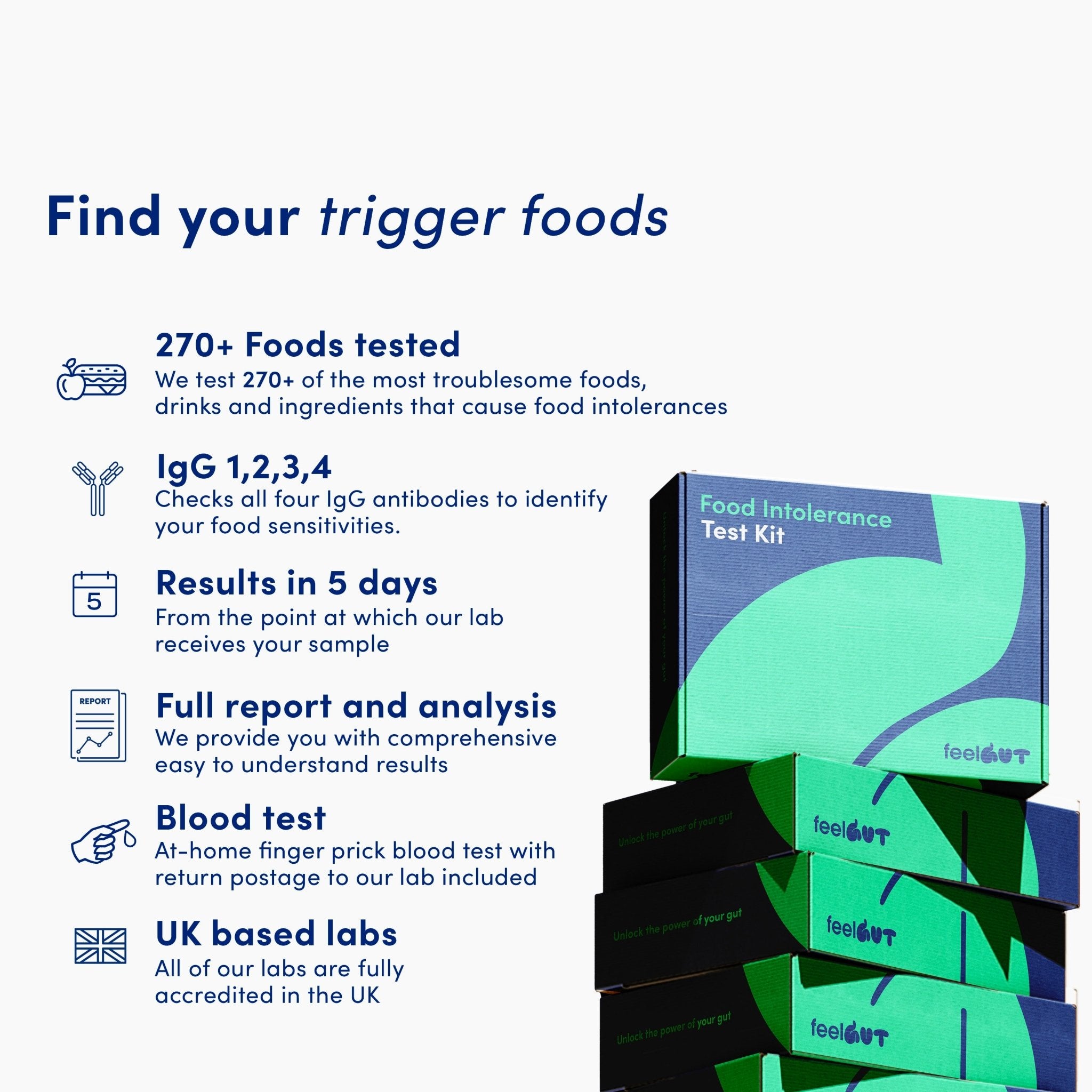
2,000+ tested
Real customers, real results
Excellent
4.7/5 on Feefo
ISO accredited labs
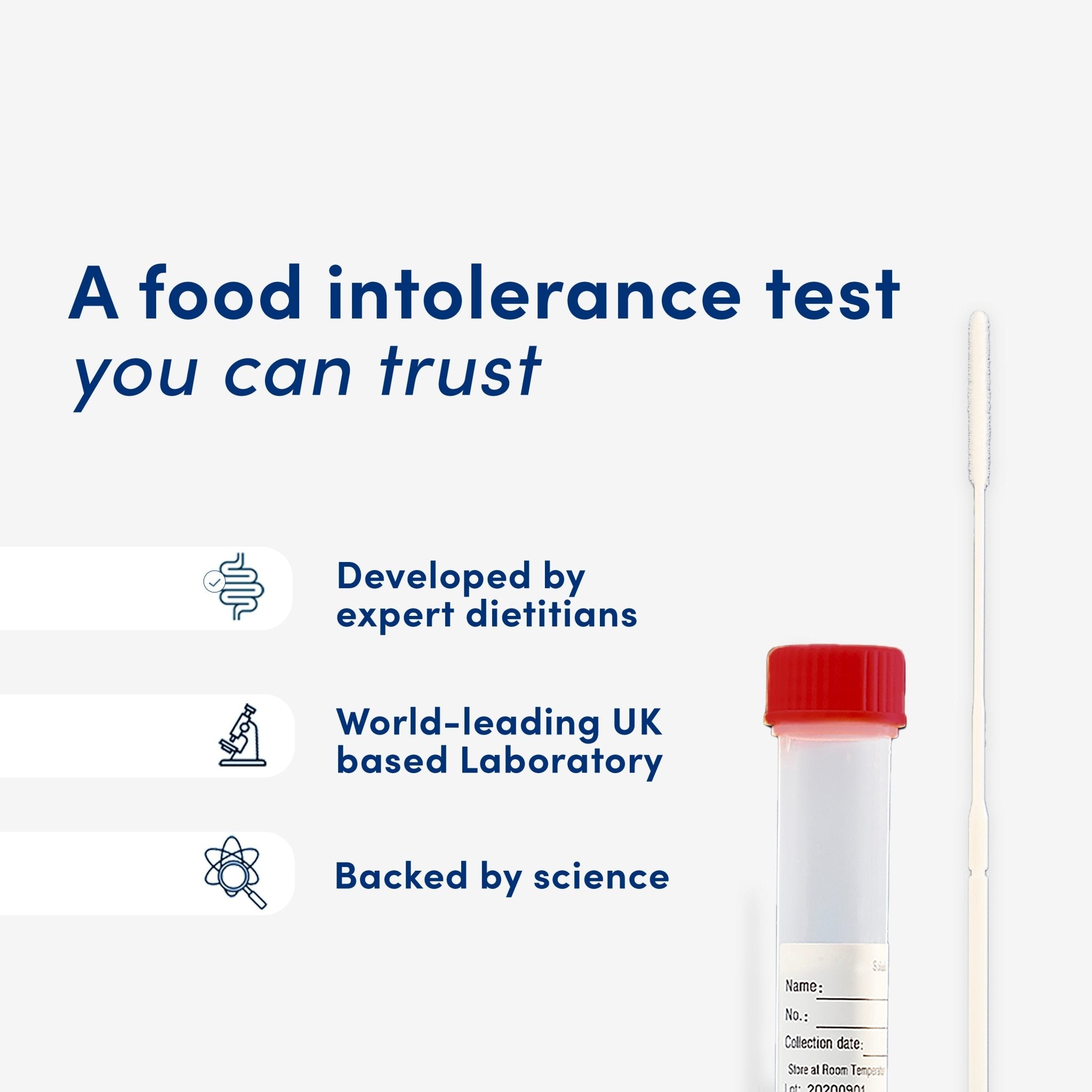
Internationally accredited lab
UK-based team
Based in the UK
Results in 5 days
Fast turnaround guaranteed
Free return delivery
Hassle-free returns included
Secure checkout
Your personal data is secure
Testing guarantee
We retest any failures free of charge
Lab tested
UK based ISO regulated labs
Our Food Intolerance test is designed to provide information and should not substitute professional medical advice as a diagnosis.
Foods tested in your panel
Search or browse the foods included in our 130-food and 270-food intolerance test panels.
Found in your test
No exact match found. Try another food or download the full food list.
Dairy, Milk & Eggs
Common dairy and egg foods included in this panel.
- Cow Milk Whey (Alpha Lactalbumin)
- Parmesan
- Cottage Cheese
- Cheddar
- Cow Milk Whey (Beta-Lactoglobulin)
- Mozzarella
- Cow Milk Casein
- Quark
- Egg White (chicken)
- Egg Yolk (chicken)
- Duck Egg
- Quail Egg
- Milk (Buffalo)
- Milk (Cow)
- Milk (Goat)
- Milk (Sheep)
- Milk (Camel)
- Almond Milk
- Oat Milk
- Soy Milk
- Coconut Milk
- Rice Milk
- Egg Yolk (Chicken)
- Egg White (Chicken)
- Cow Milk
- Sheep Milk
- Cottage Cheese
- Goat Milk
- Goat Cheese
Grains
Grains and cereals tested in this panel.
- Barley
- Couscous
- Durum Wheat
- Gliadin
- Malt
- Oat
- Rye
- Spelt
- Wheat
- Wheat Bran
- Amaranth
- Buckwheat
- Corn (Maize)
- Millet
- Tapioca (Cassava Root)
- Brown Rice
- White Rice
- Sorghum
- Quinoa
- Wheat
- Gliadin (Gluten)
- Oat
- Barley
- Buckwheat
- Brown Rice
- Spelt
- Quinoa
- Corn (Maize)
- Rye
- Couscous
Nuts and seeds
Nuts and seeds included in the test panel
- Almond
- Brazil Nut
- Cashew Nut
- Coconut
- Flax Seed
- Chia Seed
- Hemp Seed
- Hazelnut
- Macadamia Nut
- Peanut
- Pine Nut
- Pistachio
- Rapeseed
- Sesame Seed
- Poppy Seed
- Sunflower Seed
- Tiger Nut
- Walnut
- Pecan
- Chestnut
- Rapeseed
- Sesame Seed
- Hempseed
- Pine Nut
- Sunflower Seed
- Cashew Nut
- Walnut
- Almond
- Brazil Nut
- Hazelnut
- Pecan Nut
- Coconut
- Peanut
- Chia Seed
Meat
Meats and poultry tested in this panel.
- Beef
- Chicken
- Goose
- Duck
- Goat
- Horse
- Lamb
- Ostrich
- Ox
- Pheasant
- Partridge
- Pork
- Quail
- Rabbit
- Turkey
- Veal
- Venison
- Pork
- Beef
- Chicken
- Lamb
- Turkey
- Duck
Fish and seafood
Fish and seafood tested in this panel.
- Anchovy
- Barnacle
- Bass
- Sea Bass
- Carp
- Caviar
- Clam
- Cockle
- Cod
- Crab
- Eel
- Cuttlefish
- Haddock
- Hake
- Herring
- Crayfish
- Talapia
- Lobster
- Muttonfish (Abalone)
- Mackerel
- Monkfish
- Mussel
- Octopus
- Perch
- Oyster
- Pike
- Plaice
- Razor Clam
- Sea Bream (Gilthead)
- Sardine
- Scallop
- Salmon
- Sea Bream (Red)
- Shrimp
- Prawn
- Squid
- Swordfish
- Trout
- Turbot
- Tuna
- Winkle
- Skate (Thornback Ray)
- Haddock
- Crab
- Prawn
- Salmon
- Tuna
- Lobster
- Herring
- Mackerel
- Scallop
- Mussel
Herbs and spices
Herbs and spices tested in this panel.
- Aniseed
- Basil
- Bay Leaf
- Camomile
- Cayenne
- Caraway
- Chilli (Red)
- Chilli (Green)
- Cinnamon
- Cardamom
- Clove
- Coriander
- Juniper Berry
- Lemon Grass
- Curry Leaves
- Cumin
- Turmeric
- Fenugreek
- Garlic
- Ginger
- Galangal
- Dill
- Hops
- Liquorice
- Oregano
- Mint
- Mustard Seed
- Horseradish
- Stinging Nettle (Urtica dioica)
- Mace
- Nutmeg
- Parsley
- Peppercorn (Black)
- Rosemary
- Saffron
- Sage
- Peppercorn (White)
- Thyme
- Tarragon
- Vanilla
- Cinnamon
- Cumin
- Cardamom
- Nutmeg
- Sage
- Thyme
- Ginger
- Curry Leaves
- Turmeric
- Mint
- Oregano
- Red Chilli
- Mustard Seed
- Coriander
- Basil
- Parsley
- Rosemary
- Vanilla
- Garlic
- Chives
- Horseradish
Fruits
Common fruits tested in this panel.
- Apple
- Quince
- Apricot
- Avocado
- Blackberry
- Banana
- Blueberry
- Blackcurrant
- Cherry
- Cranberry
- Elderberry
- Date
- Grape (Black/Red/White)
- Fig
- Grapefruit
- Guava
- Passionfruit
- Kiwi
- Lemon
- Lime
- Lychee
- Mango
- Honeydew Melon
- Mulberry
- Nectarine
- Olive
- Orange
- Papaya
- Peach
- Pear
- Pineapple
- Plum
- Pomegranate
- Raisin
- Raspberry
- Redcurrant
- Rhubarb
- Strawberry
- Tangerine
- Watermelon
- Cantaloupe Melon
- Apricot
- Kiwi
- Lime
- Grapefruit
- Honeydew Melon
- Nectarine
- Raspberry
- Cranberry
- Pineapple
- Lemon
- Tangerine
- Plum
- Apple
- Banana
- Pomegranate
- Grape
- Watermelon
- Orange
- Strawberry
- Mango
- Peach
- Pear
- Blueberry
- Raisin
- Cherry
- Elderberry
- Avocado
- Olive
Vegetables
Common vegetables tested in this panel.
- Artichoke
- Asparagus
- Aubergine
- Broad Bean
- Green Bean
- Kidney Bean
- Haricot Bean
- Beetroot
- Broccoli
- Brussel Sprout
- Red Cabbage
- White Cabbage
- Savoy Cabbage
- Caper
- Carrot
- Cauliflower
- Celery
- Chard
- Chicory
- Chives
- Cucumber
- Fennel (Leaf)
- Leek
- Lentil
- Lettuce
- Courgette (Zucchini)
- Marrow
- Onion
- Garden Pea
- Green Pepper
- Red Pepper
- Yellow Pepper
- Potato
- Radish
- Rocket
- Shallot
- Soya Bean
- Spinach
- Butternut Squash
- Sweet Potato
- Tomato
- Turnip
- Watercress
- Yucca
- Kale
- Parsnip
- Chickpea
- Okra
- Cassava
- Capsicum Pepper
- Bell Pepper
- Onion
- Leek
- Cauliflower
- Broccoli
- Carrot
- Sweet Potato
- Parsnip
- Garden Pea
- Tomato
- Cucumber
- Spinach
- Turnip
- Green Bean
- Celery
- Brussel Sprout
- White Cabbage
- Caper
- Potato
- Lentil
- Kidney Bean
- Chickpea
- Soya Bean
Mushrooms and supps
- Cordyceps Mushroom (Cordyceps militaris)
- Spirulina
- Ginseng
- Ginkgo Biloba
- Enoki Mushroom (Flammulina velutipes)
- Oyster Mushroom (Pleurotus ostreatus)
- Shiitake Mushroom (Lentinula edodes)
- Aloe Vera
- White Mushroom
- Spirulina
Other ingredients
Drinks and additives
- Agar
- Sugarcane
- Carob
- Cocoa Bean
- Coffee
- Cola Nut
- Honey
- Baker's Yeast
- Brewers Yeast
- Transglutaminase (meat glue)
- Black Tea
- Coffee
- Cocoa Bean
- Honey
- Brewers Yeast
- Bakers Yeast
Can't find a food?
Search the full panel instantly.
Our food intolerance test checks IgG reactivity across common foods including dairy, grains, nuts, seeds, meat, fish, herbs, spices, fruit, vegetables and drinks.
Easy to understand results
What will a food intolerance test tell me?
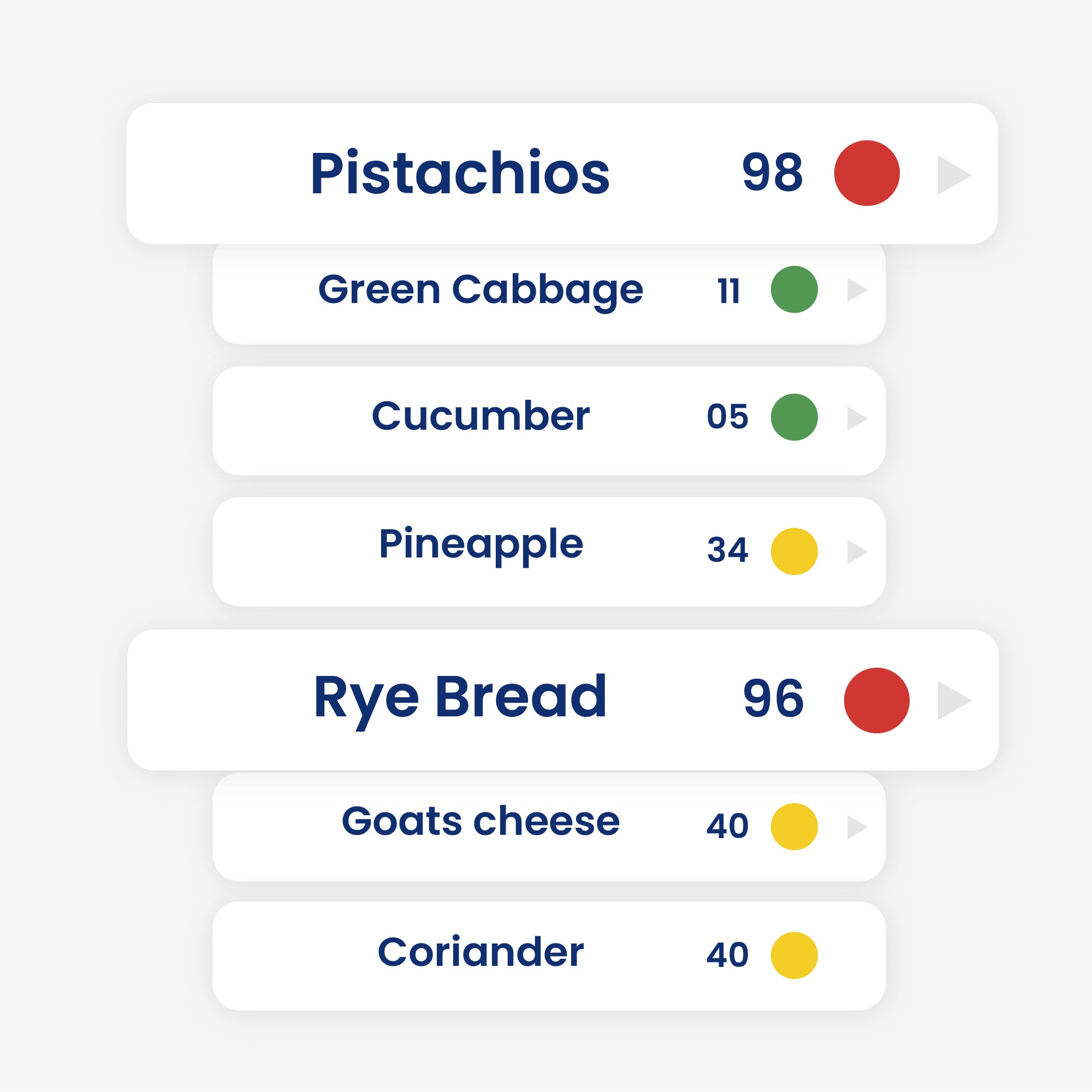
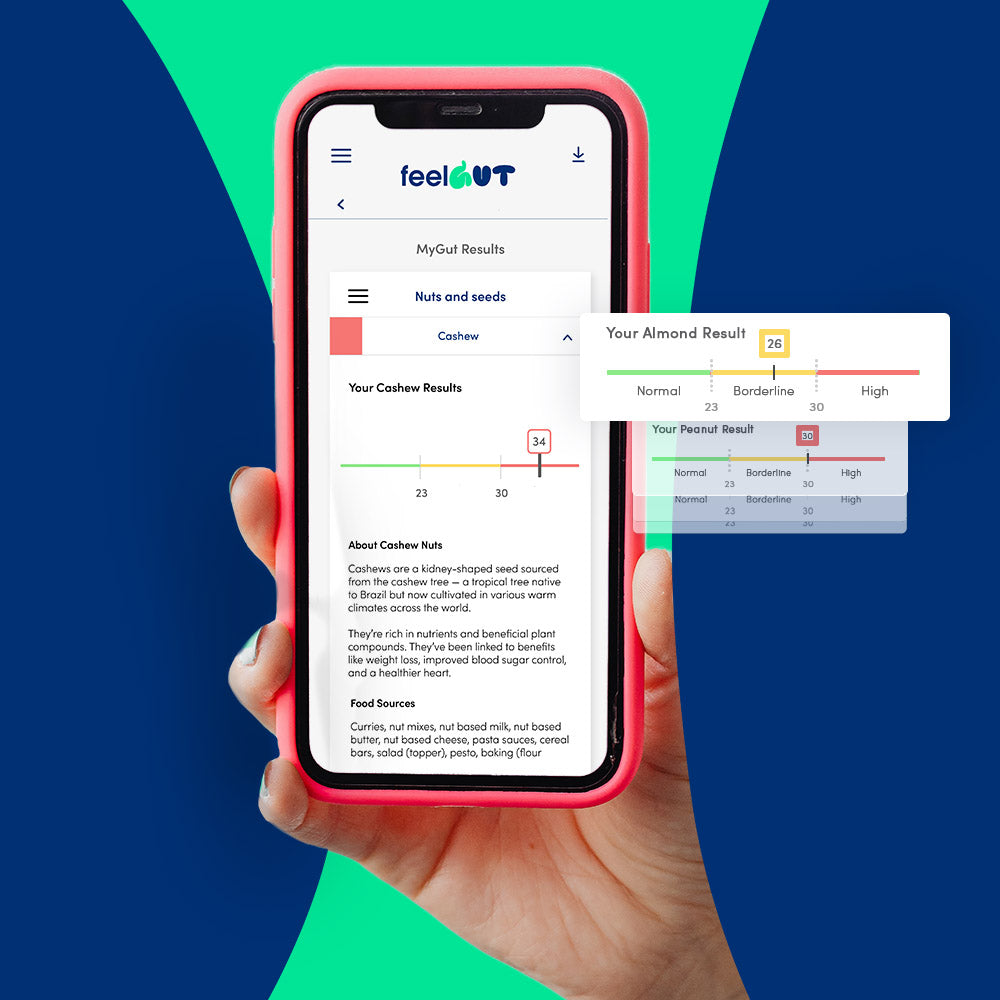
After completing the test, you'll receive a personalised report showing your body's immune responses to 270 foods, organised into clear, simple categories.
All foods are colour coded and labelled as okay to eat, reduce slightly / limit, or avoid, making it easy to understand which foods may be triggering your symptoms.
These results give you practical insight into which foods are best suited to you and which ones you may want to adjust in your diet to support your overall wellbeing.
View sample reportTake control of your symptoms
Join the feel gut club




How to take the test
Taking the test is really simple, just follow the 4 steps below. More detailed instructions are included inside every test box when you receive your test kit.

Order your food intolerance test kit
Buy your kit online, we'll send everything you need directly to your door within 2 working days.

Collect your blood sample
Just a simple prick of the finger. Full instructions included inside every kit to walk you through how to do the test.

Send your kit back
We'll provide you with a prepaid UK shipping label so you can send your sample back to our UK based lab
Receive your results
Results will be sent directly to your email address 5 days from the point our lab received your sample.
Experts at the forefront of gut health




What is a food intolerance test?
A food intolerance finger-prick blood test is a simple at-home test that measures how your immune system responds to foods you regularly eat. Using a small drop of blood collected from your fingertip, the sample is analysed in a laboratory to measure all four IgG antibody subtypes (IgG1, IgG2, IgG3 and IgG4) against 270 different foods.
By looking at these immune responses, the test provides clear, easy-to-understand insights that can help you identify foods that may be triggering symptoms and enables you to make more informed dietary choices.

We make it personal to help you feel gut
Personalised results with guidance from our clinical team. We help you adjust your diet around the foods your results flag in a structured, guided way, so you are never cutting food groups on guesswork.
FAQ's
How does a food intolerance blood test work?
A food intolerance blood test measures your IgG (immunoglobulin G)
antibody response to individual foods. Where a food shows an elevated
result, that may indicate a food sensitivity to it.
IgG is the most common antibody found in the blood; antibodies are natural proteins that are produced by your immune system that protect you when an unwanted substance enters your body.
The test requires a blood sample to be taken which is then exposed to a panel of specific foods in our lab, we expose your blood to over 270 different types of food.
Where IgG levels are elevated for a specific food, that may indicate a food sensitivity to it. Food sensitivity here means a food-specific IgG antibody reaction. It is not the same thing as a food allergy, coeliac disease or lactose intolerance, and this test does not diagnose any of those.
What can I learn from my results?
Your results will include your reactivity levels to all 270+ foods that we test for. All foods are grouped into normal, borderline and elevated reactivity levels so you can easily identify your problem foods.
You will receive both a digital and printable version of your results.
Can this test tell me if I am lactose intolerant?
Not quite, our panel measures your IgG response to dairy foods individually, including the specific milk proteins (casein, alpha-lactalbumin, beta-lactoglobulin), across cow, goat, sheep, buffalo and camel milk.
An elevated result may indicate a sensitivity to those milk proteins, which is different from a lactose intolerance.
It can tell you whether dairy protein, rather than milk sugar, is worth looking at.
Can the test tell me if I am gluten intolerant?
The panel measures your IgG response to gluten-containing grains individually: wheat, gliadin, wheat bran, durum wheat, spelt, barley, rye, malt and couscous.
An elevated result may indicate a sensitivity to that grain, and because each grain is measured separately, your report can show whether a response sits with wheat specifically or across
grains.
This test cannot diagnose coeliac disease. If gluten regularly makes you unwell, ask your GP about coeliac
testing before cutting gluten out, because you need to still be eating it for that NHS test to work.
How much is the food intolerance test?
We offer two options: the Food Intolerance Test covering 130 foods (£150), and the Complete Food Intolerance Test covering 270 foods (£170). Both include the finger-prick kit, pre-paid return postage, full lab analysis of all four IgG subtypes, your report, and nutritionist support.
How long will it take to get my results?
You will receive your results in 5 working days once our lab has received your blood sample.
When will my symptoms improve?
Everyone responds differently. Some people notice a difference within days of adjusting the foods their results flagged; for others it takes weeks, and sometimes a flagged food turns out not to be the issue at all.
The way to know is to make changes one at a time, in a structured way with our team's guidance, and let your own symptoms be the judge.
Can I take the test if I am pregnant?
No, nutrition during pregnancy is more important than ever, we do not recommend making any major adjustments to diet and lifestyle during this time. It is also common for food intolerances to arise during pregnancy and cause symptoms such as acid reflux.
Can anyone take the test?
To take the test you need to live in the UK. This is because our labs are based in the UK and need to receive your blood sample as fast as possible.
How do I take the test?
We will send you a finger-prick collection kit to take your blood sample. The kit will include everything you need to take the test. Simply prick your finger, collect your blood, and send it back to our lab on the same day using the pre-paid return shipping label.
Step-by-step instructions will also be included in your test kit.
When is the best time to take the food intolerance test?
We recommend taking your blood sample in the morning and sending it back to us on the same day.
Do I need to fast before I take the test?
No, you do not need to fast before you take the test.
Where can I get a food intolerance test?
You can buy a test online from a number of providers. We recommend ensuring that the test is a blood test and is analysed by an ISO accredited lab within the UK.
Is this test suitable for children?
This test can be used by anyone over the age of 2 years old. However, for children, we would recommend our gut microbiome test which is a more comprehensive test and comes with a full nutrition and supplement plan developed by our team.
Blog posts

What are the symptoms of a food intolerance?
Food intolerances can have several symptoms, the severity and combinations of symptoms can vary throughout individuals, with some experiencing multiple symptoms at once.

What is a food intolerance? Everything you need to know
Medically reviewed by Kate Hilton RDOn 12 June 2023 In this guide we will explore the topic of food intolerance and provide detailed insight into, common food intolerances, symptoms, trigge...

Medically reviewed by Kate Hilton RDOn 12 June 2023 Understanding the causes, symptoms, diagnosis, and management of gluten intolerance Gluten intolerance is one of the most common forms of...
Authored by

Reviewed by
