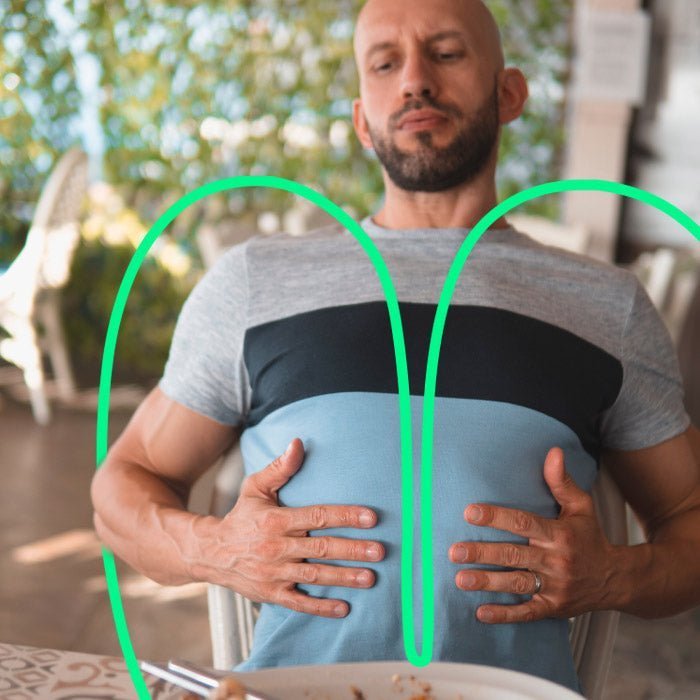


Indigestion (dyspepsia) is pain or discomfort in your upper abdomen, or a burning feeling behind your breastbone, that usually appears after eating or drinking. Most people get it at some point, and for most of us it is mild, occasional and manageable at home.
Persistent indigestion often has no single disease behind it. When symptoms keep returning and tests find no structural cause, doctors call it functional dyspepsia. Around 8% of adults worldwide are affected, according to a 2024 review of 44 studies covering more than 250,000 people in 40 countries, and women are affected more often than men.
Occasional indigestion is rarely a sign of anything serious. It needs proper medical attention when it is severe, keeps coming back, or arrives with any of the warning signs listed towards the end of this guide.
What are the symptoms of Indigestion?
The common symptoms of indigestion include one or more of the following, usually after eating or drinking:
- Heartburn, a burning feeling behind the breastbone
- Belching and flatulence
- Food or drink coming back into your gullet after being consumed
- Feeling full very quickly, or staying uncomfortably full long after a meal
- Pain or a burning feeling in your upper abdomen
- Bloating and discomfort in your upper abdomen
- Feelings of sickness or nausea
A 2021 European consensus, agreed by 41 specialists, groups these symptoms into two overlapping patterns: pain or burning centred high in the stomach area, and fullness or early satiety around meals. Many people have both at once.
Some symptoms that feel similar are usually unrelated. Stomach ache lower down, or back pain, is more often constipation than indigestion.
What causes indigestion?
The immediate trigger is usually stomach acid irritating the sensitive lining of your stomach or gullet. That irritation produces the pain and burning, and anything that increases the acid’s contact with the lining makes an episode more likely.
Beyond that, indigestion has many potential causes. Rich, fatty or spicy meals, eating quickly, alcohol, smoking, stress and being overweight all raise the chances. As well as cutting back on your own triggers, it may help to introduce healthier foods that are known to help with acid reflux, heartburn and indigestion.
The most common everyday causes are:
- Certain types of medication such as NSAID's, the group of painkillers that includes ibuprofen, aspirin and naproxen
- Lifestyle factors, such as drinking too much alcohol, smoking, and a diet heavy in fatty food
There are also underlying illnesses that can cause indigestion, including:
- Hiatus hernia, where part of the stomach moves up into the chest
- Stomach ulcer, an open sore in the stomach lining
- GORD (acid reflux disease)
- A bacterial infection called Helicobacter pylori (H. pylori), which can inflame the stomach lining and lead to gastritis
- Rarely, cancer of the stomach
- Gut dysbiosis, an imbalance of bacteria within the gastrointestinal tract. A gut microbiome test can identify if gut dysbiosis is present.
Stress, pregnancy and some prescription medicines can also bring indigestion on or make it worse.
Helicobacter pylori (H. pylori) deserves a closer look because it is treatable. This common stomach infection can cause recurring bouts of indigestion by inflaming the stomach lining, and it becomes more likely with age. UK guidance recommends testing for it when indigestion persists, using a simple breath or stool test arranged through your GP.
Often, though, tests come back normal. A major 2020 review in The Lancet estimates that around 8 in 10 people investigated for dyspepsia have no structural explanation for their symptoms. This is functional dyspepsia, and research links it to the way the gut and brain communicate. The stomach may empty more slowly than it should, relax less as it fills, and register normal stretching as pain.
The same review lists changes in the gut microbiota, the community of bacteria living in your digestive tract, among the probable contributors. This is early research. A small 2026 study of 28 people found that the bacteria lining the first part of the small intestine differed between people with functional dyspepsia and people without it, alongside differences in nearby immune cells. Findings this preliminary cannot yet guide treatment, but they help explain why gut bacteria are drawing serious attention in indigestion research.
What a stool sample can show is the balance of bacteria in your gut, not the cause of your symptoms. Our page on gut microbiome testing for indigestion explains what is measured, what the results can and cannot tell you, and where testing fits alongside seeing a GP.
How is Indigestion diagnosed?
Most bouts of indigestion need no tests at all. In the UK, NICE guidance recommends a community pharmacist as the first stop, for advice on lifestyle changes and over-the-counter treatment, with a GP visit when symptoms persist.
If you do see your GP, they will ask about your symptoms, eating habits and medical history, and review the medicines you take, because several common ones can cause indigestion as a side effect. Never stop a prescribed medicine on your own. Raise it with your GP instead.
NICE recommends that people with persistent indigestion are tested for H. pylori, using a breath test or a stool sample. If the infection is present, a short course of treatment improves symptoms in some people.
An endoscopy is not a routine part of diagnosing indigestion. Doctors reserve it for people with warning signs, symptoms that do not settle with treatment, or new symptoms from around the age of 55, according to the 2020 Lancet review. The procedure passes a thin, flexible tube with a camera through the oesophagus into the stomach, usually with a sedative offered. It lets a specialist examine the lining of the upper digestive tract, take tissue samples, and check for ulcers, inflammation of the gullet (oesophagitis) or, rarely, cancer.
Treatment for Indigestion
Most indigestion can be managed at home, and changes to diet and lifestyle are the foundation. The NHS suggests:
- Cut down on tea, coffee, cola and alcohol
- Avoid rich, spicy or fatty foods, and do not eat in the 3 to 4 hours before bed
- Prop your head and shoulders up in bed, which can stop acid rising while you sleep
- Lose weight if you are overweight, and stop smoking if you smoke
- Check with a pharmacist or GP before using ibuprofen or aspirin for other aches and pains, as these can make indigestion worse
For flare-ups, a pharmacist can recommend antacids, which neutralise stomach acid, or alginates, which form a protective barrier over the stomach contents to stop them rising. Both can be bought without a prescription.
If those do not control the symptoms, your GP may prescribe a stronger acid-reducing medicine such as omeprazole or lansoprazole. These belong to a group of drugs known as Proton Pump Inhibitors (PPIs), which work by reducing the amount of acid your stomach produces. NICE recommends a four-week course first, then stepping down to the lowest dose that keeps symptoms controlled. PPIs ease symptoms rather than removing the cause, so the diet and lifestyle changes still matter alongside them.
Severe acid reflux left unmanaged for years can damage the oesophagus, occasionally scarring and narrowing it. That is one reason persistent symptoms belong in front of a GP rather than being managed indefinitely with over-the-counter remedies.
Frequently Asked Questions
How can I ease my belching and bloating?
Belching usually comes from swallowed air. Eating and drinking slowly, avoiding fizzy drinks and chewing gum, and not smoking all reduce it.
The gas lower down is made by gut bacteria breaking food down, and a certain amount is completely normal. Lactose, the natural sugar in milk, and certain vegetables are frequent culprits when wind becomes excessive.
How do you get indigestion to go away?
Identify and cut back on your triggers first. Carbonated drinks, spicy and fatty foods, alcohol and smoking are the most common. An antacid from a pharmacy or supermarket eases a flare-up while those changes take effect. If indigestion still keeps returning, see your GP rather than relying on remedies long term.
What foods can cause indigestion?
Not everyone reacts to the same foods, but the frequent triggers include:
- Fatty foods, such as fried food, pastry, fatty cuts of meat and full-fat dairy products
- Caffeine, in tea, coffee and cola
- Citrus fruits, and tomatoes
- Chocolate
- Mint and mint-flavoured products, such as chewing gum and breath mints
- Spicy food
- Garlic and onions
In some cases, indigestion can be linked to certain food intolerances. When the body struggles to digest specific foods, such as dairy, wheat or high-FODMAP ingredients, the result can be bloating, discomfort and a feeling of fullness after eating, which overlaps with what many people describe as indigestion.
Can indigestion feel like a heart attack?
Yes. Heartburn and a heart attack can both cause chest pain, and even doctors cannot always tell the difference without tests. If you have persistent or severe pain in your chest, call 999 straight away. Do not wait to see whether it passes.
Heartburn is the more likely explanation when the burning starts in the upper abdomen and rises into the chest, comes on after eating or when lying down or bending over, improves with antacids, or leaves a sour taste in your mouth.
Call 999 if chest pain comes with pressure, tightness or crushing that spreads to your arms, jaw or back, shortness of breath, a cold sweat, light-headedness or sudden fatigue. Indigestion-like discomfort can itself be a heart attack symptom in some cases.
Why is indigestion common in pregnancy?
Reflux symptoms affect roughly 4 in 10 pregnancies, rising to more than half of women in the final three months, according to a 2025 review of 21 studies covering 9,497 pregnant women. Pregnancy hormones relax the valve between the stomach and the oesophagus, and later in pregnancy the growing baby presses against the stomach, so stomach contents travel upwards more easily.
Symptoms usually settle after the birth. The NHS guidance on indigestion and heartburn in pregnancy suggests smaller, more frequent meals and sitting upright when you eat. Speak to your midwife, GP or pharmacist before taking any remedy, because not everything is suitable in pregnancy. Antacids and alginates are the options they will usually suggest.
How do you know if you are having indigestion?
The pattern to look for is discomfort that follows eating or drinking. Feeling sick, feeling full or bloated, excessive wind, a burning feeling in the chest, or bringing up bitter-tasting fluid after meals all point towards indigestion rather than a problem lower down in the gut.
What can I do if my indigestion is caused by GORD?
Gastro-oesophageal reflux disease (GORD) is when acid repeatedly rises from your stomach into your oesophagus, the tube that links your throat to your stomach. It usually happens because the valve between the two has weakened or relaxes too often, and it causes a burning feeling and an acidic taste in the mouth.
Antacids can settle mild symptoms by neutralising stomach acid, and alginates add a protective barrier over the stomach contents. If you have not been diagnosed and the symptoms keep returning, see your GP before treating yourself long term. For confirmed GORD, the usual prescription is an acid-reducing medicine, most often a PPI, stepped down to the lowest dose that keeps symptoms controlled.
Many people find a food diary useful for spotting which meals set their symptoms off. If you notice reactions to specific foods, testing for a food intolerance may also be beneficial and help you identify foods worth discussing with your GP or a dietitian before you cut anything out.
Stopping smoking, losing weight if you are overweight and cutting down on alcohol also ease reflux. Eat smaller meals, and avoid eating anything substantial in the two hours before you go to bed.
Why do I always get heartburn at night?
Lying flat lets stomach acid travel towards the gullet more easily, which is why heartburn so often surfaces at bedtime. Raising the head end of your bed, or propping your head and shoulders up, uses gravity to keep the acid down. Bending over or straining to go to the toilet can set it off in the same way.
What other health problems can cause indigestion?
The conditions covered earlier account for most cases with a medical cause. In brief, they are stomach ulcers, GORD, hiatus hernia, H. pylori infection and, rarely, stomach cancer. Pregnancy and some prescription medicines also make indigestion more likely.
When should you see a GP about indigestion?
See your GP if you keep getting indigestion, or if it arrives with any of the following. These are the warning signs the NHS lists, and they need proper investigation rather than more antacids:
- Losing a lot of weight without meaning to
- Difficulty swallowing, or food sticking on the way down
- Being sick repeatedly, or vomit with blood in it
- Blood in your stools, or stools that look black and tarry
- Severe pain
- Iron deficiency anaemia
- A lump or persistent fullness in your stomach area
Age matters as well. Specialists reserve camera tests for people with the signs above, symptoms that do not settle with treatment, or new symptoms from around the age of 55, because the chance of a serious underlying cause rises with age. If you are 55 or over and your indigestion is new or has changed, book a GP appointment rather than waiting.
Most of these symptoms turn out to have less serious explanations. They still need checking by a doctor, and a home gut test is never the right response to any of them.
For chest pain that is severe or will not pass, call 999.
Sources
- NHS (reviewed 2023). Indigestion. https://www.nhs.uk/conditions/indigestion/
- NHS (reviewed 2023). Indigestion and heartburn in pregnancy. https://www.nhs.uk/pregnancy/common-symptoms/indigestion-and-heartburn/
- NICE (2014, reviewed 2019). Gastro-oesophageal reflux disease and dyspepsia in adults: investigation and management (CG184). https://www.nice.org.uk/guidance/cg184
- Ford AC et al. (2020). Functional dyspepsia. The Lancet. https://pubmed.ncbi.nlm.nih.gov/33049222/
- Wauters L et al. (2021). United European Gastroenterology and European Society for Neurogastroenterology and Motility consensus on functional dyspepsia. United European Gastroenterology Journal. https://pubmed.ncbi.nlm.nih.gov/33939891/
- Lee K et al. (2024). Global prevalence of functional dyspepsia according to Rome criteria, 1990-2020. Scientific Reports. https://pubmed.ncbi.nlm.nih.gov/38378941/
- Khurmatullina AR et al. (2025). Global prevalence and risk of gastroesophageal reflux disease symptoms in pregnancy. BMC Pregnancy and Childbirth. https://pubmed.ncbi.nlm.nih.gov/41366751/
- Hoedt EC et al. (2026). Altered duodenal mucosa-associated microbiota and immune profiles in functional dyspepsia. Neurogastroenterology and Motility. https://pubmed.ncbi.nlm.nih.gov/41603727/
This guide is for information only and does not replace medical advice. If your indigestion is persistent, severe or comes with any of the warning signs above, speak to your GP. A home test is never a substitute for seeing a doctor.