

What are gut parasites?
Gut parasites are tiny organisms that live in the digestive tract. They can cause a range of health problems, from mild digestive discomfort to serious illness if left untreated.
Many parasites cannot be seen with the naked eye, and this makes it easy for them to spread to humans via contaminated water, food, and person-to-person transmission. Parasites can take many forms and can cause varying degrees of symptoms depending on the type of infection and the individual affected.
Many people associate gut parasites with tropical regions, but these infections can occur anywhere, including the UK.
Common types of parasites
There are two main types of gut parasites that affect humans:
Protozoa:
These are microscopic single-celled parasites. Protozoa will typically cause common symptoms such as diarrhoea, stomach ache, nausea and vomiting. Common examples of protozoa include:
- Giardia lamblia: causes giardiasis, leading to watery diarrhoea and abdominal pain.
- Cryptosporidium spp.: causes cryptosporidiosis, known for long-lasting diarrhoea.
- Entamoeba histolytica: causes amoebiasis, which can lead to severe intestinal inflammation and liver abscesses.
- Cyclospora: causes cyclosporiasis, an infection of the intestines that leads to long-lasting watery diarrhoea.
Helminths (Worms):
These are larger, multicellular parasites. Common examples include:
- Tapeworms: flatworms that live in the intestines and absorb nutrients.
- Roundworms (Ascaris lumbricoides): cause blockages in the intestines in severe cases.
- Hookworms: tiny worms that latch onto the intestinal wall and feed on blood, causing anaemia.
- Pinworms (threadworms): the most common type of worm infection in the UK, especially in children, causing itching around the anus.
Which parasites are actually common in the UK?
Not every parasite on the list above is an everyday worry in the UK. A small number account for most infections diagnosed here, and several of the others are almost always picked up abroad.
Threadworms are the most common worm infection in the UK, and most cases are in children. They are usually dealt with through a pharmacy rather than a GP appointment, which is covered in more detail below.
Among the single-celled parasites, Cryptosporidium and Giardia are the two most often confirmed in UK laboratories, and the UK Health Security Agency (UKHSA) monitors both nationally. UKHSA guidance notes that cryptosporidiosis is seen most often in children aged between 1 and 5, and that UK outbreaks have been linked to contaminated swimming or drinking water and to contact with lambs and calves at open farms (see UKHSA’s cryptosporidiosis guidance and data, which is public health guidance rather than a study).
Those farm outbreaks are current, not historical. UKHSA investigators reported 39 laboratory-confirmed Cryptosporidium cases across four outbreaks at a single animal-contact attraction in South West England between 2023 and 2025, mostly linked to close contact with young lambs (Sims B, et al. (2026). Recurrent zoonotic Cryptosporidium parvum transmission at an animal-contact visitor attraction, South West England. Epidemiology and Infection. https://pubmed.ncbi.nlm.nih.gov/42522202/).
Giardia has a reputation as a travel infection, and that reputation is only half right. A 2016 clinical review in the BMJ, written by UK specialists, notes that giardiasis is regularly acquired within the UK as well as abroad, so having no recent travel history does not rule it out (Minetti C, et al. (2016). Giardiasis. BMJ. https://pubmed.ncbi.nlm.nih.gov/27789441/).
The rest of the list is mostly travel related. Entamoeba histolytica, Cyclospora, hookworms and most tapeworm infections seen in the UK are usually acquired overseas, particularly in regions where water sanitation is poor (Norman FF, et al. (2020). Update on the major imported protozoan infections in travelers and migrants. Future Microbiology. https://pubmed.ncbi.nlm.nih.gov/32065535/). This is why a GP will usually ask about recent travel early on.
How do gut parasites spread?
Since many parasites are too small to be seen with the naked eye, humans can unknowingly come into contact with them. Gut parasites spread through the faecal-oral route, meaning you can become infected when you accidentally ingest parasite eggs or cysts (the infectious form of the parasite) from an infected person’s faeces. Whilst this may sound unlikely, there are several ways that it can happen:
Contaminated food and water
- Drinking, swimming or swallowing untreated water from lakes or rivers.
- Eating raw or unwashed fruits and vegetables that contain the parasite’s cysts
- Consuming undercooked meat or fish that may contain the parasite’s cysts.
Person-to-person contact
- Parasites like pinworms spread easily in households, schools, and nurseries due to poor hygiene practices among children.
- Changing nappies or caring for someone with an infection can increase the risk of transmission if appropriate hand sanitation is not followed.
Animal contact
- Animals are also prone to infection, so pets, farm parks and petting zoos can increase the risk of transmission.
- In some cases, playing in soil contaminated with animal faeces can lead to infections such as hookworms.
Travel to high-risk areas
- Travelling to tropical or subtropical regions increases the risk of infection, especially in areas where water sanitation is poor.
Common gut parasites and their symptoms
Giardia lamblia (Giardiasis)
How it spreads: Contaminated water, unwashed produce, and close contact with infected people.
Symptoms:
- Watery, foul-smelling diarrhoea
- Stomach cramps and bloating
- Nausea and fatigue
- Pale, greasy stools that float (due to fat malabsorption)
Symptoms of Giardiasis will typically appear 1-2 weeks after encountering the parasite.
Cryptosporidium spp. (Cryptosporidiosis)
How it spreads: Contaminated water (including swimming pools), unwashed produce, and contact with infected people or animals.
Symptoms:
- Long-lasting watery diarrhoea
- Abdominal pain and cramping
- Low-grade fever
- Weight loss due to dehydration
Symptoms can appear 2-10 days after being exposed to the parasite and can last for up to 4 weeks.
Researchers pay particular attention to Cryptosporidium because of who it affects most severely. A review in The Lancet Infectious Diseases identified it as a leading cause of diarrhoeal illness worldwide, with the most serious illness in young children and in people with weakened immune systems (Checkley W, et al. (2015). A review of the global burden, novel diagnostics, therapeutics, and vaccine targets for cryptosporidium. The Lancet Infectious Diseases. https://pubmed.ncbi.nlm.nih.gov/25278220/).
Entamoeba histolytica (Amoebiasis)
How it spreads: Contaminated food and water, especially in tropical regions.
Symptoms:
- Bloody or mucus-filled diarrhoea
- Severe stomach pain
- Fever
- In severe cases, liver abscesses
In the UK, amoebiasis is almost always acquired abroad. A 2018 review found it has become an important infection among returning travellers and migrants in higher-income countries, and that severe cases can be life threatening without treatment (Shirley DT, et al. (2018). A Review of the Global Burden, New Diagnostics, and Current Therapeutics for Amebiasis. Open Forum Infectious Diseases. https://pubmed.ncbi.nlm.nih.gov/30046644/). Bloody diarrhoea always needs a GP, whatever the suspected cause.
Tapeworms (Taeniasis)
How it spreads: Eating undercooked or raw meat (especially pork or beef) containing tapeworm cysts.
Symptoms:
- Mild digestive discomfort or no symptoms in some cases
- Visible tapeworm segments in stools
- Unexplained weight loss
- Nutrient deficiencies
Pinworms (Threadworms)
How it spreads: Swallowing pinworm eggs after touching contaminated surfaces, bedding, or toys.
Symptoms:
- Intense itching around the anus, especially at night
- Irritability and difficulty sleeping
- Restlessness in children
If you think you or your child has threadworms, NHS guidance is to speak to a pharmacist first. Treatment is available from a pharmacy for most people, and everyone in the household over the age of 2 is usually treated at the same time. Speak to a GP first for a child under 2, or if you are pregnant or breastfeeding (see the NHS guidance on threadworms).
Hookworms
How it spreads: Walking barefoot on contaminated soil.
Symptoms:
- Anaemia (due to blood loss)
- Fatigue and weakness
- Abdominal pain
Hookworm is rare in the UK and almost always picked up abroad, most often by walking barefoot in places with poor sanitation. Globally it is a major cause of iron deficiency anaemia: a review in Nature Reviews Disease Primers estimated that almost 500 million people are infected, with children and women of childbearing age most at risk of anaemia (Loukas A, et al. (2016). Hookworm infection. Nature Reviews Disease Primers. https://pubmed.ncbi.nlm.nih.gov/27929101/).
How are gut parasite infections diagnosed?
Diagnosing a parasitic infection requires specific testing to confirm which parasite is present. Various tests may be used to detect traces of the parasite’s DNA, whilst other methods may involve blood samples or scans, particularly if there is evidence that the parasite has spread beyond the gut. The most common ways of testing for a parasite are:
Stool sample testing
A stool test is the most common way to diagnose gut parasites, and our preferred method of testing. Stool samples can be done at home and sent off to a lab to confirm the presence of parasite eggs, cysts, or DNA. You may be asked to supply multiple stool samples over several days, because parasites are shed intermittently and may not appear in a single sample.
The advice to supply more than one sample is well supported. When researchers reviewed stool test records from 339 people with confirmed protozoan infections, testing three samples instead of one picked up between 11 and 31 per cent more infections, depending on the parasite (Hiatt RA, et al. (1995). How many stool examinations are necessary to detect pathogenic intestinal protozoa? The American Journal of Tropical Medicine and Hygiene. https://pubmed.ncbi.nlm.nih.gov/7625530/).
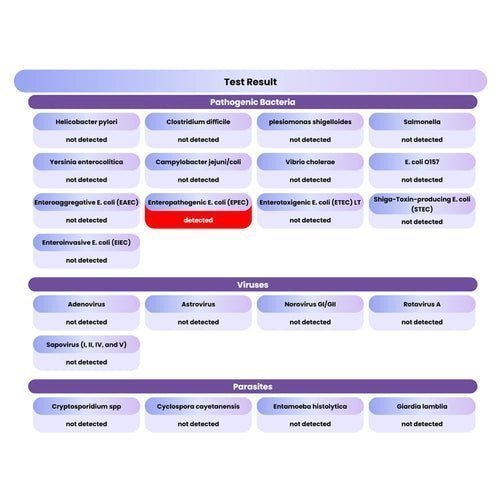
Stool tests can be used to identify common parasites such as Cryptosporidium, Cyclospora and Giardia. Our gut parasite test helps to identify 28 types of parasites, pathogenic bacteria and viruses.
Stool tests vary in what they cover. Some test only for parasites and not the wider microbiome, whereas others profile the microbiome but not parasites. Tests such as the Gi Map test and our complete gut microbiome test include both a microbiome and parasite testing panel.
What will a GP test for on the NHS?
If you see your GP with symptoms that could suggest a parasite, the usual first step is a stool sample sent to an NHS laboratory. Testing on the NHS is free, and for anyone who is unwell it is the right starting point.
NHS laboratories routinely look for Giardia and Cryptosporidium in samples from people with persistent diarrhoea. They widen the search to other parasites, such as amoebae and worm eggs, when there is a specific reason to, most often recent travel to a higher-risk region. Telling your GP exactly where you have travelled and when helps the laboratory look for the right organisms.
Threadworms are the exception. They are usually identified by sight rather than by a stool test, and treated through a pharmacy, as described above.
What a stool test cannot tell you
Stool testing has real limits, whether it is done through the NHS or with a home kit, and they are worth knowing before you test.
A single sample can miss an infection, as the research above shows, because parasites are shed intermittently. A negative result makes a parasite less likely, but it does not rule one out completely.
Newer tests look for the parasite’s DNA rather than relying on someone spotting the parasite under a microscope. A major review of molecular testing found that DNA methods are generally more sensitive and easier to standardise, which is why laboratories increasingly use them (Verweij JJ, Stensvold CR (2014). Molecular testing for clinical diagnosis and epidemiological investigations of intestinal parasitic infections. Clinical Microbiology Reviews. https://pubmed.ncbi.nlm.nih.gov/24696439/). The trade-off is that finding a parasite’s DNA is not the same as proving it is the cause of your symptoms.
Some organisms that appear on wider stool panels sit in a genuine grey area. Blastocystis, for example, is one of the most common organisms found in human stool anywhere in the world. It turns up in many people with no symptoms at all, and researchers still disagree about whether and when it causes illness (Stensvold CR, Clark CG (2016). Current status of Blastocystis: A personal view. Parasitology International. https://pubmed.ncbi.nlm.nih.gov/27247124/).
This is why any result, from any test, needs interpreting alongside your symptoms and history. A test can tell you what was found in a sample. It cannot diagnose a condition, and it is never a reason to delay seeing a GP if you are unwell.
Our guide to what stool tests for parasites can and cannot tell you looks at these limits in more detail, including why one sample can miss an infection and why more findings do not mean a better test.
Blood tests
A blood test can help detect infection with liver fluke (a type of parasitic flatworm that lives in the liver and bile ducts) by identifying signs of an immune response or damage caused by the parasite.
Imaging tests
Where a parasite has spread outside the intestines, for example causing a liver abscess, an ultrasound or CT scan may be used to detect complications.
How are gut parasite infections treated?
Whether a gut parasite needs treatment depends on the type of parasite and your overall health. In some cases, the immune system clears the infection on its own. However, for many types of gut parasites, treatment is recommended to prevent complications, shorten the duration of symptoms, and reduce the risk of spreading the infection to others.
A note before the detail: in the UK, the medicines named below are supplied through a pharmacy or prescribed by a doctor once a parasite has been confirmed. Which treatment is right, and whether you need one at all, is a decision for a clinician who knows your history.
Protozoa treatments
Giardia lamblia (Giardiasis):
In most cases, treatment with medication (such as metronidazole or tinidazole) is needed to clear the infection.
Giardiasis can persist for weeks or months without treatment, causing chronic diarrhoea, nutrient malabsorption, and weight loss.
Both the persistence of untreated giardiasis and the standard treatments named here are described in the BMJ clinical review of giardiasis (Minetti C, et al. (2016), as above).
Cryptosporidium spp. (Cryptosporidiosis):
In healthy individuals, cryptosporidiosis can sometimes clear on its own within 1-2 weeks. However, it can cause prolonged symptoms and dehydration.
Entamoeba histolytica (Amoebiasis):
Most people infected with Entamoeba histolytica do not develop symptoms. However, around 1 or 2 in 10 people with amoebiasis will develop symptoms.
This parasite often causes invasive infections that do not clear on their own and can lead to liver abscesses and serious complications.
Treatment with antibiotics (such as metronidazole) followed by an anti-cyst medication (e.g., paromomycin) is essential to clear both the active infection and prevent recurrence.
Helminths (Worm infections) treatments
Helminths, such as roundworms, tapeworms, and pinworms (threadworms), generally require treatment, though the severity and progression of the infection can vary:
Examples and treatment recommendations:
Pinworms (Threadworms):
Pinworms rarely clear up on their own.
Treatment with medications such as mebendazole or albendazole is usually required, along with hygiene measures to prevent reinfection (e.g., regular washing of bedding, clothes, and thorough handwashing).
Since pinworm eggs spread easily, it’s common practice to treat all household members simultaneously.
Tapeworms (Taeniasis):
Tapeworm infections can persist for years without treatment, causing nutrient deficiencies, unexplained weight loss, and other complications.
In some cases, people may not know they’re infected until they pass segments of the tapeworm in their stool.
Treatment with praziquantel or niclosamide is usually required to kill the tapeworm so that the body can expel it.
Roundworms (Ascariasis):
Mild infections with roundworms may not cause noticeable symptoms and can resolve as the worms die naturally.
However, in moderate to severe infections, treatment with albendazole or mebendazole is needed to kill the worms and prevent complications like intestinal blockages.
Hookworms:
Hookworm infections rarely clear on their own and can cause chronic blood loss, leading to anaemia.
Treatment with albendazole or mebendazole is typically required to kill the worms, along with iron supplements to treat anaemia.
Rehydration treatment
Diarrhoea is one of the most common symptoms of a gut parasite infection, so it is important to replace lost fluids with electrolytes or oral rehydration solutions.
Nutritional treatment
Parasites can disrupt the balance of the gut, leading to impaired nutrient absorption and resulting in deficiencies of certain vitamins and minerals. A gut imbalance (dysbiosis) can also prolong the symptoms of a parasitic infection. Eating a gut-healthy, nutrient-rich diet may help restore the balance of the gut microbiome and support your recovery.
What foods help you to recover from a parasite?
High fibre diet: foods like fruits, vegetables, whole grains, nuts, legumes, and seeds. Introduce fibre to your diet slowly and remember to drink plenty of fluids.
Fermented foods with live cultures: Yoghurt, kefir, and fermented vegetables, like kimchi and sauerkraut, may help support the balance of bacteria in your gut.
Hydration: Drink plenty of fluids and avoid alcohol and caffeine, as they can worsen dehydration.
Read our guide on good gut foods for a full breakdown of foods that can help to improve your gut health.
Can gut parasites be prevented?
You cannot remove every chance of coming into contact with a parasite, but simple precautions can reduce your risk of infection.
Follow food safety procedures:
- Thoroughly wash fruits and vegetables under clean, running water.
- Avoid eating raw or undercooked meats.
Water safety:
- Drink bottled or boiled water in areas where sanitation is poor, particularly areas that are classed as high-risk.
- Avoid adding ice cubes into your drink in high-risk countries.
Personal hygiene:
- Wash your hands with soap and water after using the toilet.
- Follow the same procedure before and after handling food.
- Regularly clean household surfaces, especially in bathrooms and kitchens.
- Teach children good hygiene habits to prevent the spread of parasites in nurseries and schools.
When should you see a GP?
Most stomach bugs settle on their own within about a week. NHS guidance is to contact NHS 111 or your GP if diarrhoea lasts more than 7 days, and diarrhoea that is still going after two weeks particularly needs assessing, because that is the point at which parasites such as Giardia become more likely (see the NHS guidance on diarrhoea and vomiting).
See your GP if you have any of the following:
- Diarrhoea that has lasted more than a week, and certainly if it passes two weeks
- Blood or mucus in your stool
- Unexplained weight loss
- A fever alongside your gut symptoms
- Gut symptoms that started during or after travel abroad
- A change in your normal bowel habit lasting more than three weeks
- New gut symptoms starting over the age of 50
Some people should seek advice earlier rather than waiting a week. If you are pregnant or have a weakened immune system, or the person affected is a young child, speak to your GP or NHS 111 promptly, because these infections can be harder on you and dehydration develops faster. For a baby under 12 months, or a young child with signs of dehydration such as fewer wet nappies, NHS advice is to call 111 the same day.
No stool test, at home or on the NHS, replaces that conversation. If anything on this list applies to you, see your GP first. Testing can support what your GP does next, never substitute for it.
Gut health and parasites
A healthy gut microbiome may make it more difficult for a parasite to establish an infection, and may also lessen the severity of symptoms if you do become infected.
This is a young area of research, and the claims made for it should stay modest. A 2017 review of studies in people and animals found that the mix of bacteria in the gut appears to influence whether protozoan parasites take hold and how severe the illness becomes, but much of that evidence comes from animal studies, so it is best read as promising rather than proven (Burgess SL, et al. (2017). Parasitic Protozoa and Interactions with the Host Intestinal Microbiota. Infection and Immunity. https://pubmed.ncbi.nlm.nih.gov/28584161/).
Your gut microbiome forms part of your defence against infection: a balanced and diverse microbiome supports the gut lining and your immune system. After a parasitic infection, the balance of your gut microbiome may have been disrupted, so eating prebiotic foods and fermented foods with live cultures may help support your microbiome as it recovers.
A gut health test can be used to identify gut dysbiosis after a parasitic infection. A full report and personalised recommendations on how to improve your gut health will also be provided.
Conclusion
Gut parasites are more common than you might think and can cause a wide range of symptoms, from mild digestive issues to more serious complications. While infections are more frequent in certain parts of the world, they can still occur in the UK, particularly through poor hygiene or exposure to contaminated food or water.
By practising good hygiene, being mindful of food and water safety, and supporting your gut health, you can reduce your risk of infection. If you suspect you have a gut parasite, a stool test may help identify what is causing your symptoms, and your GP or pharmacist can advise on treatment. Supporting your recovery with the right diet and hydration can help protect your long-term digestive health.
If anything in the "When should you see a GP?" section above applies to you, or you are simply not getting better, see your GP first. Testing works best as part of that conversation, not instead of it.
Sources
- Minetti C, et al. (2016). Giardiasis. BMJ. https://pubmed.ncbi.nlm.nih.gov/27789441/
- Checkley W, et al. (2015). A review of the global burden, novel diagnostics, therapeutics, and vaccine targets for cryptosporidium. The Lancet Infectious Diseases. https://pubmed.ncbi.nlm.nih.gov/25278220/
- Shirley DT, et al. (2018). A Review of the Global Burden, New Diagnostics, and Current Therapeutics for Amebiasis. Open Forum Infectious Diseases. https://pubmed.ncbi.nlm.nih.gov/30046644/
- Loukas A, et al. (2016). Hookworm infection. Nature Reviews Disease Primers. https://pubmed.ncbi.nlm.nih.gov/27929101/
- Norman FF, et al. (2020). Update on the major imported protozoan infections in travelers and migrants. Future Microbiology. https://pubmed.ncbi.nlm.nih.gov/32065535/
- Sims B, et al. (2026). Recurrent zoonotic Cryptosporidium parvum transmission at an animal-contact visitor attraction: insights into infection prevention and control, South West England (2023-2025). Epidemiology and Infection. https://pubmed.ncbi.nlm.nih.gov/42522202/
- Hiatt RA, et al. (1995). How many stool examinations are necessary to detect pathogenic intestinal protozoa? The American Journal of Tropical Medicine and Hygiene. https://pubmed.ncbi.nlm.nih.gov/7625530/
- Verweij JJ, Stensvold CR (2014). Molecular testing for clinical diagnosis and epidemiological investigations of intestinal parasitic infections. Clinical Microbiology Reviews. https://pubmed.ncbi.nlm.nih.gov/24696439/
- Stensvold CR, Clark CG (2016). Current status of Blastocystis: A personal view. Parasitology International. https://pubmed.ncbi.nlm.nih.gov/27247124/
- Burgess SL, et al. (2017). Parasitic Protozoa and Interactions with the Host Intestinal Microbiota. Infection and Immunity. https://pubmed.ncbi.nlm.nih.gov/28584161/
This guide also refers to UK public health guidance: the NHS pages on threadworms and on diarrhoea and vomiting, and UKHSA’s cryptosporidiosis guidance and data collection. These are guidance documents rather than individual studies.